
The way cancer treatments have been conducted over the past 30 years has shifted significantly toward a multidisciplinary approach rather than a single-disciplinary approach. The modern approach to oncology acknowledges the existence of cancer as a disease that affects various organs and arises from different genetic alterations, depending on patient factors and stages of disease. Three key things are required for effective cancer treatment: diagnosis, therapy, and collaboration.
Comprehensive cancer care consists of three main components: correct diagnosis, team-based treatment development, and specialized treatment methods. Medical professionals use diagnostic precision to develop effective treatment plans, enabling them to determine the tumor's type, stage, and biological features. This process begins with medical professionals who make the decision, while experts from various fields evaluate the case to select the most appropriate treatment. The treatment process includes multiple methods that medical professionals use to deliver surgical procedures, chemotherapy, radiation therapy, targeted therapy, and immunotherapy.
A patient-centered approach becomes the main focus at leading cancer centers because they treat cancer patients, and the treatment process includes medical interventions together with psychological support, nutritional assistance, and required supportive treatment operations. Medical professionals create personalized treatment plans for each patient because their medical circumstances require distinct treatment approaches to achieve the best health results. Contemporary cancer treatment methods rely on scientific evidence, international treatment guidelines, and ongoing research to deliver the most effective care to patients.
The diagnostic process and treatment coordination for patients with tumors depend on dedicated diagnostic services, including endoscopy and tumor board evaluation.
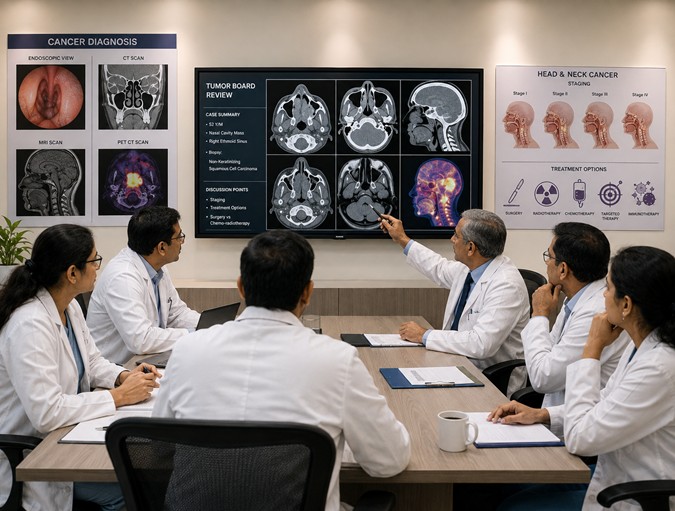
Tumor Board Evaluation
Our multidisciplinary Tumor Board brings together specialists from surgical oncology, medical oncology, radiation oncology, radiology, pathology, and other relevant specialties to review each cancer case and develop an individualized treatment approach based on the diagnosis, stage, and overall health of the patient.
Read More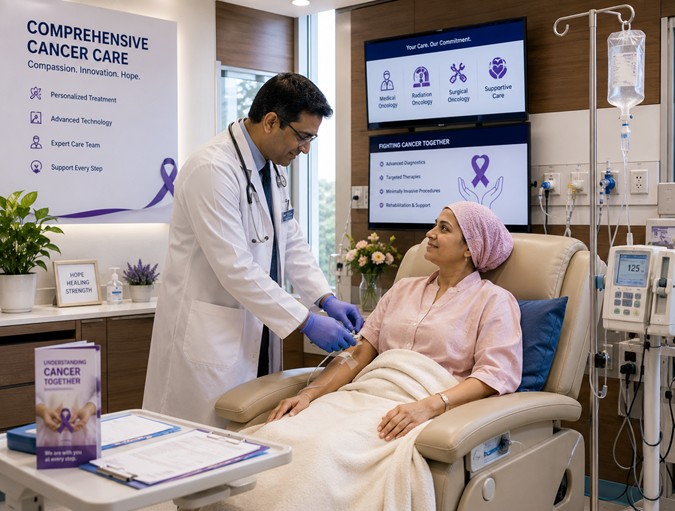
Cancer Treatment Services
Tender Palm Hospital provides comprehensive cancer treatment options tailored to the type, stage, and individual needs of each patient. Treatment may include surgery, chemotherapy, targeted therapy, immunotherapy, radiation therapy, hormone therapy, and supportive care, planned through a multidisciplinary approach.
Read More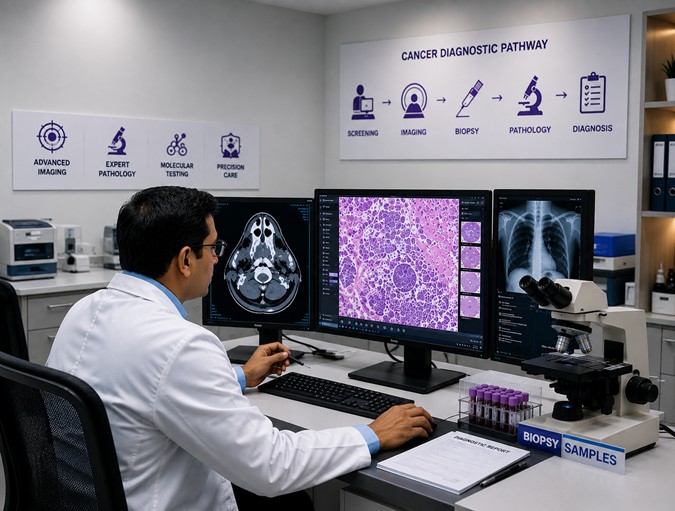
Cancer Diagnostic Services
Our comprehensive cancer diagnostic services include specialist consultation, clinical evaluation, imaging, biopsy, histopathology, immunohistochemistry, molecular testing, and advanced laboratory investigations to help confirm cancer, identify its characteristics, determine the stage, and support personalized treatment planning.
Read MoreAwards & Accreditations


